
Tech Services · Remote Engineering
Remote Engineering Hub
Our remote engineering services put dedicated engineers inside your team. They work your hours, use your tools and take direction from your leads. Once you approve someone, onboarding takes 48–72 hours.
- 3,000+ pre-vetted specialists
- 48–72h onboarding
- Free replacement guarantee
- 15-day notice

$9–10/hr
starting rate for a full-time remote engineer
↓ What every remote engineering contract includes
3,000+
Pre-vetted engineers, testers and DevOps specialists
48–72h
From your approval to the engineer’s first working day
15 days
Notice to scale down or end a contract
$0
To replace an engineer who isn’t the right fit
Quick answer
What is remote engineering?
Remote engineering is a way of hiring where engineers work full time for your company from another location, usually another country, through a provider such as Cubikey. The provider handles hiring, payroll, equipment and replacements. You manage the work.
It sits between freelancing and opening your own office abroad. You get the commitment of an employee without setting up an overseas entity, and unlike outsourcing a project, you keep control of the backlog and the technical decisions. Need a particular stack? See how to hire .NET, Java, React and full-stack developers.
| Who directs the work | You and your engineering leads |
|---|---|
| Who employs the engineer | Cubikey: payroll, benefits, equipment, HR |
| Time to start | 48–72 hours after you approve a candidate |
| Starting rate | From $9–10/hr for a full-time engineer |
| Notice period | 15 days, either side |
| If it doesn’t work out | Free replacement |
Global Remote & Regional Delivery Models
Three ways to set up a
remote engineering team
All three use the same pre-vetted engineers and the same 15-day notice. What changes is the size of the team and how much of the day-to-day running you want us to take on.
1 engineer
Dedicated engineer
From $9–10/hr
One full-time engineer added to your existing team. It suits companies that already have a lead and a clear backlog.
- Works your hours and joins your stand-ups
- Uses your repos, ticketing and chat
- Interviewed and approved by you
- Free replacement if the fit is wrong
3–8 people
Engineering pod
Monthly fee per pod
A small cross-functional unit, for example a tech lead, three developers and a QA engineer, that owns one product area or stream of work.
- Tech lead who runs sprint ceremonies with you
- Back-end, front-end, QA and DevOps skills in one unit
- Leave and sick cover arranged by us
- One monthly invoice for the whole pod
10+ engineers
Offshore development centre
Scoped with you
A long-term team with its own delivery manager, built up in stages. Companies use it to move a large share of engineering offshore.
- Delivery manager and agreed reporting
- Shared runbooks, onboarding guide and knowledge base
- Hiring plan that follows your roadmap
- Security and access set up to your policies
Day to day
Working with a remote engineer
feels like working with anyone else
Most of the difference is in the contract. The daily routine stays the same, and a normal week looks like this.
Same tools, same rituals
Your engineer joins your stand-ups and retros and works in your Jira, GitHub or GitLab, Slack or Teams. No parallel process on our side.
Overlap hours agreed up front
We set the shift around your time zone before day one, so meetings land inside shared hours and nobody guesses.
One person on our side
A named account manager deals with contracts, leave, equipment and replacements, which keeps HR questions out of your sprint.
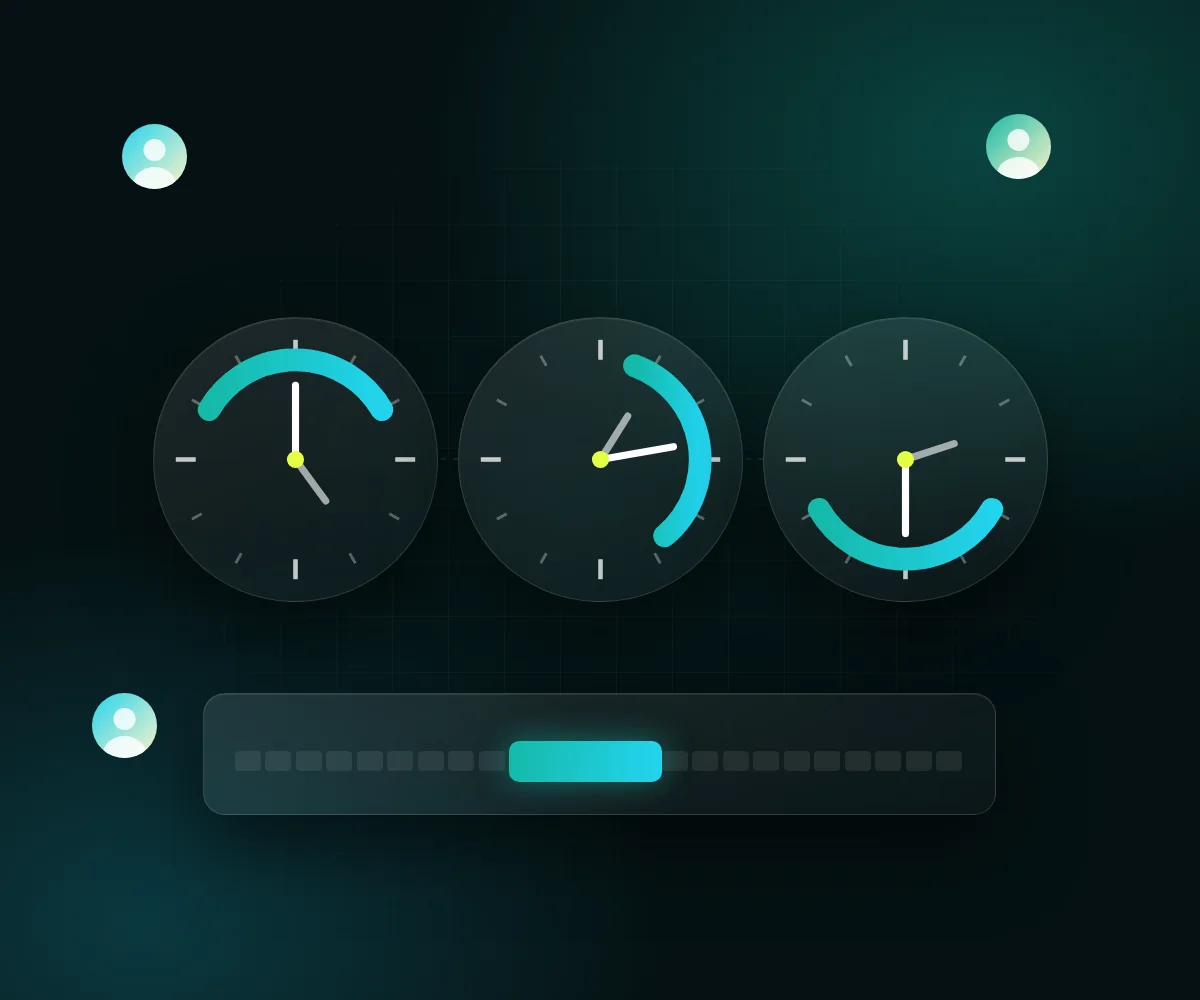
5–7h
typical overlap with UK and European teams
How it works
From brief to
first commit
Interviews run on your schedule. Everything after your approval moves fast.
Step 1
Share the brief
A 30-minute call about the stack, seniority, time zone and the first piece of work. If we can’t staff the role well, we say so.
Step 2
Interview a shortlist
You get profiles of engineers who passed our technical screening. You run your own interviews and pick the person.
48–72 hours
Onboarding
We sort the contract, laptop, accounts and access with your admin. The engineer joins your stand-up and picks up a first ticket.
First weeks
Check-in
We talk to you and the engineer separately. If the fit is wrong, we replace them at no cost.
Every month
Review and scale
A short review of output and blockers. Add people when you need them, or scale down with 15 days’ notice.
In-house hiring vs a
remote engineer
Both can work. The difference is mostly time to start, total cost and what happens when someone leaves.
Hiring in-house
Right for roles you will keep for years and want on site.
- Weeks of sourcing, screening and interview loops before an offer
- Accepted candidates often serve one to three months’ notice at their current job
- Salary, benefits, equipment and office costs on your books
- A resignation sends you back to the start
Cubikey remote engineer
Right when you need people now and want to stay flexible.
- A shortlist of pre-vetted engineers to interview
- Onboarding in 48–72 hours after you approve
- One rate per engineer, from $9–10/hr
- Free replacement and a handover if someone leaves
- 15 days’ notice to scale down
Active bench
Engineers we place
in remote teams
Roles we can staff from the active bench. If your stack is unusual, ask anyway: the bench changes every week.
Back-end developers
APIs, services and data access for web and mobile products.
- Java
- Spring Boot
- .NET
- C#
- Node.js
- Python
- Go
- PostgreSQL
Front-end and mobile
Web and mobile interfaces, from the design system to the app store release.
- React
- Next.js
- TypeScript
- Angular
- Vue
- React Native
- Flutter
Full-stack developers
One engineer across UI, API and database. Useful for smaller teams.
- MERN
- .NET + React
- Java + Angular
- Node.js + Vue
- Docker
Cloud and DevOps
Infrastructure as code, CI/CD pipelines and on-call for production systems.
- AWS
- Azure
- Google Cloud
- Kubernetes
- Terraform
- GitHub Actions
QA and test automation
Manual and automated tests that run inside your pipeline.
- Playwright
- Selenium
- Cypress
- Appium
- JMeter
- Postman
Data and enterprise platforms
Data pipelines, reporting and the platforms that run your operations.
- Databricks
- Snowflake
- Power BI
- ServiceNow
- Salesforce
Questions about remote engineering
How quickly can a remote engineer start?
Onboarding takes 48–72 hours after you approve a candidate. In that window we finish the contract, ship equipment if needed and set up accounts with your admin. Interviews come first, and their length depends on your own process.
How much do remote engineering services cost?
Rates start at $9–10/hr for a full-time engineer. The final rate depends on seniority, stack and the overlap hours you need, and you see it for each candidate before the interview. It covers salary, benefits, equipment and our account management.
Who manages remote engineers day to day?
You do. Engineers take tasks from your backlog and report to your engineering lead. We handle employment, payroll, leave, equipment and any HR issue. In the pod and ODC models, a tech lead or delivery manager on our side also runs ceremonies with you.
What happens if an engineer isn’t a good fit?
Tell your account manager. We replace the engineer free of charge and arrange a handover so the work doesn’t stall. The same applies if an engineer resigns.
Who owns the code and IP?
Your company. Our contract assigns the rights in all work done for you to your business, and every engineer signs confidentiality terms before getting access. We can sign your NDA as well.
Can we scale the team down?
Yes. Either side can reduce the team or end the contract with 15 days’ notice. There is no minimum team size for the dedicated engineer model.
Which time zones do you cover?
Engineers shift their working day to overlap with yours. UK and European teams usually get five to seven shared hours, Gulf teams a full day, and US and Australian teams a few hours plus written hand-offs. The regional delivery table above has the details.
Is remote engineering the same as outsourcing?
No. With outsourcing you hand over a project and the provider decides how to deliver it. With remote engineering the engineers are part of your team and you decide what gets built and how. If you would rather hand over day-to-day operations, look at our managed IT services.
Tell us the role.
We’ll send profiles.
Share the stack, seniority and time zone. You’ll hear back within one working day.